

Research Connecting ExL & Mental Health
Report: Promoting Protective Factors in California’s Afterschool Programs
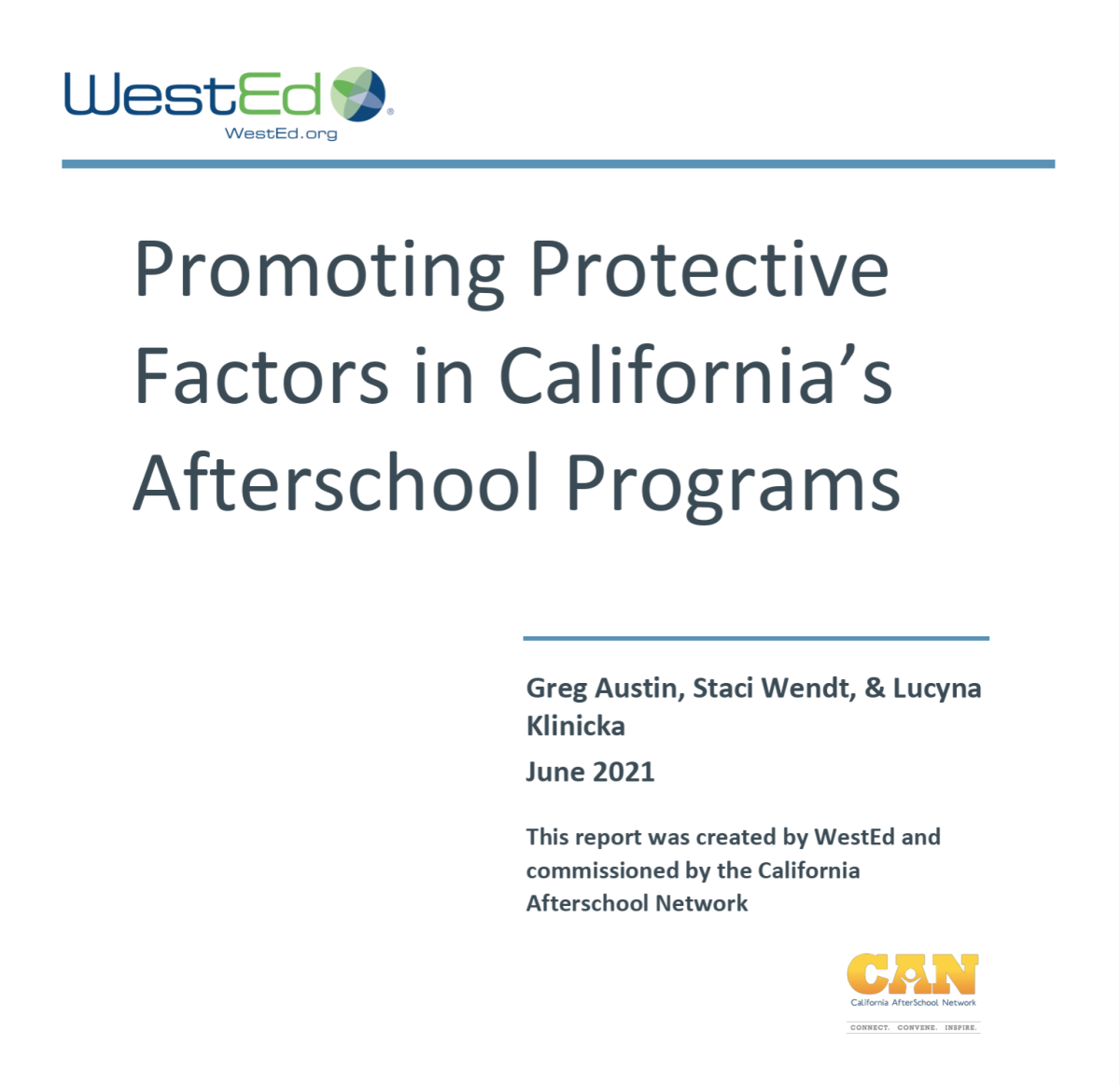 This report, drawing on data from
the California Healthy Kids Survey (CHKS), examines the extent to
which afterschool programs may help foster more
protective factors among its participants compared to their peers
who were not program participants. This report was
created by WestEd and commissioned by the California AfterSchool
Network.
This report, drawing on data from
the California Healthy Kids Survey (CHKS), examines the extent to
which afterschool programs may help foster more
protective factors among its participants compared to their peers
who were not program participants. This report was
created by WestEd and commissioned by the California AfterSchool
Network.
A Protective Factors Framework
Research on protective factors and resilience emphasizes the importance of three broad areas of environmental support:
- Caring Relationships. A single positive, trusting relationship with a caring adult can make an enormous difference in the ability of children to overcome a host of negative life experiences.
- High Expectations. Youth need to experience high-expectation messages that convey adults believe the youth can and will succeed, that they won’t give up on them but will encourage and help them to do their best, nurturing each youth’s unique strengths and pathways to success.
- Meaningful opportunities for participation and contribution. Youth need to be engaged in activities and decision-making opportunities that contribute to their sense of autonomy and control, give them voice, increase their involvement in school/community, and engage their interests.
Learn more about the Protective Factors Framework and key findings by clicking here.
Access the Full Report here.